
“The Borscht Belt” also known as the “Jewish Alps” developed in Sullivan and Ulster County’s in upstate New York starting around the late 1800’s, early 1900’s ending around the late 1990’s and became the summer playground destination at the turn and throughout the 20th century for vacationing mostly Ashkenazi Jews to escape the heat of the city when air conditioning did not exist till nearly 50 years later. In the beginning before it was called the “Borscht Belt” The “Jewish Alps” and other names it became a popular destination for trout fishing but its real growth came from need for a place for a vacation and a need for a vocation .
Anti-semitism was a major factor that prevented Jews from going to many hotel destinations and contributed to the beginning, thriving and growth of the “Borscht Belt”. Jews were denied access to rooms or hotels. Some hotels advertised and would say no Jews or Hebrews in their ads and or include Negros and dogs. Hence Jews had to look elsewhere. One notorious example was the Kenilworth of Bal Harbor north of Miami Beach, like many Miami Beach hotels at the time had a reputation for being anti-Semitic.
The hotels, boarding houses and bungalow colonies catered primarily to poor and middle class mainly immigrant Ashkenazi Jews starting around the late 1800’s, early 1900’s ending around the late 1990’s when the industry collapsed and ended its’ premier place in vacation history that once was mainly for Jewish populations and in the end entertained people from all over the world as a leading first class vacation destination that became a victim of new technology, competitive vacation alternatives, the easing of anti-semitism, the onset of gambling not available to the “Borscht Belt” and the changing tastes of Jews looking for alternatives like cruising, the beginning of the “Jet Age” with affordable flying to other parts of the world and combining their holidays with gambling that was available elsewhere but not in Sullivan or Ulster Counties other than Monticello Raceway. As far as gambling goes the politicians failed the “Jewish Alps” by voting against it.
In the very early days to get to “The Borscht Belt” families would go to Weehawken New Jersey and take the train (NY Ontario and Western Railroad aka the O & W Rail Line) up to Roscoe, Liberty, and Fallsburg NY. The hotels would pick their guests up at the train station and transport them to and from the hotel. Bus service evolved as well when cars came into play. These became the primary means of transportation to “The Borscht Belt”.
In the early 1900’s many Jews went north from the city to Ulster and Sullivan Counties to start farms a skill they brought with them from the old country. They would rent out rooms to supplement their incomes taking in summer boarders who were looking for an inexpensive getaway from the blistering heat of the city.
Others went north for health reasons or to open up boarding houses, bungalow colonies with “Kuchalayns” or “kochaleyn” (pronounced KOKH-a-lane or kuckalane), a Yiddish word meaning sharing of kitchens with other boarders or literally defined as “cook alone” a communal cooking space used by multiple families.
Jews from all over the 5 boroughs of New York City, the surrounding tri state area and further looked forward to enjoying with their families hot dry mountainous summer days, cool summer nights, delightful chilling fresh water mountainous lakes, crisp clean country air, the sounds of chirping birds, leaping frogs, on occasion the whisper of the trees, the rumbling rushing sounds of nearby waterfalls.
There were the random appearances of deer and other wildlife swiftly rushing by unknown to city dwellers. It was especially the joy of family’s spending quality time together for a few short weeks that flew by rapidly and suddenly you are back to the hot humid heavy air of the city once again only to remember those weeks that flew by so fast and all you had was melancholy memories and photos only to hope to return the following summer if fate and your budget would allow it.
As the industry developed and thrived it became a mecca for first class accommodations, the finest entertainment , 1st class great home cooking all you can eat unlimited servings of kosher cuisine and there were some hotels without kosher cuisines but very few; all types of activities like indoor and outdoor swimming , winter and summer sports like ice skating, skiing, tobogganing, horseback riding , world class golf, square dancing, amateur nights, movie nights, late night buffets, pre dinner buffets, midnight snacks, coffee shops open all day and night, room service, dance contests, “Simon says”, bingo , card rooms where the woman played MahJong and the men played poker and pinochle, lots of romance and the making of new families who one day many returned to do the same all over .
Guests from the city would travel to the Catskills and would stay and live with strangers who knew nothing about the hotel hospitality business, providing food or activities for NYC summer strangers. But they learned and many over decades evolved into epic luxurious resorts. It became a high end family vacation destination featuring top name entertainers and shows. It was a breeding ground for fresh new talent.

For example Jerry Lewis whose real name was Joseph Levitch started in “The Borscht Belt” because of his talented of his parents who were performing there in its early beginnings.
His parents Danny and Rachel Levitch stage name Lewis were vaudevillians who hosted and performed in the summers at the Browns Hotel where little Jerry learned his craft. Jerry as a little kid was planted in the audience in the first row by his very talented parents. His parents would say to the audience would anyone like to volunteer and join us on stage and Jerry would raise his hand and join his parents. No one but a few guests knew it was a setup that he was on stage with his parents.
It was often called “The Borscht Belt” simply because at lunch in every hotel dining room borscht a cold beet soup was on every hotel menu along with many other choices of soups. As hotels became bigger and more successful the menus became extensive with too many choices and you could eat as much as you wanted and people did.
What is borscht? Borscht is primarily a beet soup of various recipes’ popular with Ashkenazi Jews from Poland, Russia the Ukraine, other Eastern European countries and other countries in other parts of Europe. Hence the name “The Borscht Belt”. Jewish legend says there is a red line made from borscht on the highways leading to these resorts in Ulster and Sullivan County taking these families to summer heaven away from the sweltering oppressive heat and humidity that was New York in the summer time before the advent of air conditioning.
In the early days of driving you traveled from New York City in a car without air-conditioning because there was none. The primary routes were # 9W, # 17, # 44, # 52, # 202 # 209 and any combination then later the Palisades Parkway came in 1952 and the NY Thruway came around 1956.
But before these new highways were built, it was a slow hot brutal trip with lots of traffic and people hanging their heads out the window to get some moving air. Others were fanning themselves. Often the trip took anywhere from 4 hours to 6 hours depending on the traffic. When the New York Thruway was finished in August 1956 life changed dramatically and the travelling time was cut down to 2-2.5 hours and air conditioning was becoming popular in homes and cars.
The hotel industry in the Catskills started in part by anglers who trout went fishing because the area had a great reputation for this. In other cases people who were trying to make a living on the lower east side of Manhattan and other neighborhoods some selling their goods and services from push carts or small store fronts in the city and were not doing well or wanted to try something different decided to start a rooming house, or would buy and rent out rooms in a small farm house they had purchased and advertise to come to the mountains for a cool vacation, fresh air and get away from the bustling city life. It evolved and became popular. Guests would stay in bungalows, family homes, rooming houses and small hotels created by entrepreneurial families. Some would provide food and in others you would be able to use the kitchen and cook your own food. It was called a “Kuchalein” which in Yiddish means to cook for yourself or to cook alone.
When people asked where you are going for vacation you would say we are going to “The Yiddish Alps”, or “The Catskills”, or “The Mountains”, or “The Jewish Alps” and many affectionately called it “The Borscht Belt”.
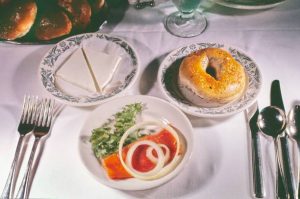
As hotels became bigger, better and more successful they offered lots of food to compete with other hotels. You could eat to your heart’s content. You had so many selections in each category on the menu and could order one, two, or three of each item. You had a choice of 5 juices, 2 types of melons, fruit cocktails, 4 soups(including matzoh ball soup, 6 appetizers, 4 types of bread, 8 main dishes, 10 types of drinks,5 deserts and each table had olives, pickles, fresh coleslaw made daily, and celery on it. Water was served to everyone without asking for it. There were lemons and other appropriate condiments.
The poultry, fish and meats were fresh mostly from local farms and streams. Each hotel had their own bakery where each day you had fresh bagels, Challah, rye bread, onion rolls , pumpernickel and of course regular rolls. The food was fresh, tasty and the service was excellent. After each meal moms and dads would take food back to the room just in case or something to “nosh” on for the trip back home to the 5 boros.
You tipped the waiter at the end of each week you stayed. In the 1950s-60’s you gave $5 a week to the waiter and the busboy got $3 a week. Some waiters (usually teenagers going to college and working in the summers to pay for their education) served 50-60 people each day 3 meals a day. That’s 180 entrees plus other things daily. No one complained. They were grateful to make that kind of money at such a young age. That’s if you were in a good hotel that had lots of guests.
The waiters could make from $300 a week to $600 and the busboys could make from $180 to $ 300 a week. Not bad for those times but long hours and hard work. Up at 6 am to get ready to serve breakfast, reset the tables for lunch and lunch was from 12 noon till 2 pm; you clean up and set up for dinner which was from 6 pm till 8 pm and you again cleaned up and set up again for breakfast.
You usually finished at 10 pm in the dining room and went to shower and then catch the late show or work in the coffee shop after the show serving late night ice cream sundaes or the usual fare like bagels and drinks. Or you and the guys headed down the road to some bar for fried shrimp and beer.
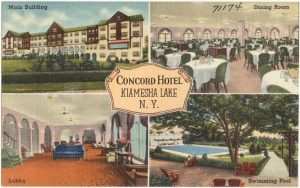
On the weekends you would try and sneak into the Concord Hotel in Kiamesha Lake NY or Grossingers in Liberty NY and catch Tom Jones or Jackie Mason performing amongst so many other great talents. If Jerry Lewis (Jerome Levitch} was performing at the Browns Hotel you would try and sneak in there. They worked hard and played hard. Most of these kids were in or went on to college and became Doctors, lawyers, and other professionals and later had families of their own and went to “The Borscht Belt” as guests. They went full circle.
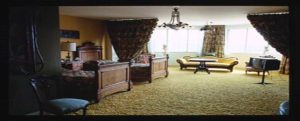
The hotel staff got free clean shity rooms they shared with others but they either didn’t care or didn’t know any better; they were happy to be out of the city and working. They ate the same great food that was served to the guests and were allowed to use the facilities and see the shows.
They also had opportunities to have flings with the guests some of whom were single and most guests who were married. The husbands worked in the city during the week and came up on the weekends to be with the wife and kids. So when the cats away the mice did play. The hotel owners encouraged the young men to dance with single unattached girls so the girls would have a good time.
Many performers got their start and gained experience entertaining in “The Borscht Belt” later to become famous and some were already famous.
Milton Berle, Jerry Seinfeld, Barbra Streisand, Mel Brooks, Don Rickles, Henny Youngman, Joan Rivers, Woody Allen, Jackie Mason, Sid Caesar, Buddy Hackett, Carl Reiner father of Rob Reiner, Joey Bishop, Tony Bennett, Danny Kaye, Rodney Dangerfield, Abbott and Costello, Billy Crystal, Jerry Stiller, Marx Brothers, Gene Wilder, Dean Martin, Judy Garland, Eddie Fisher, Steve Lawrence and Eydie Gorme, Richard Pryor, Sammy Davis Jr and the list goes on and on.
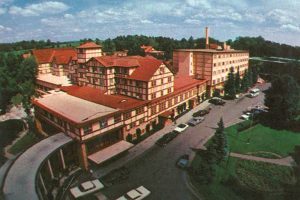
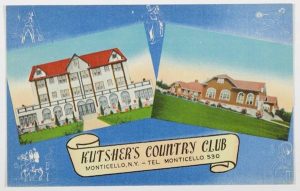
Some of the more famous hotels were The Concord, Grossingers, The Nevele, Kutchers, Browns, The Raleigh, Tamarack, The Stevensville, Shawanga Lodge, The Pines, The Homowack, Steiner’s Resort, The Paramount, The Granit , The Laurels Hotel and Country Club, The Flagler , The Eldorado and too many to mention.
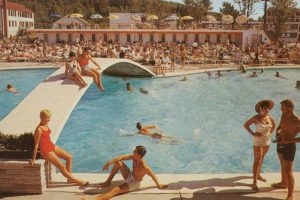
At its peak the number of resorts varied but it is estimated there were 800 + Hotels of all sizes and amenities, 2500 bungalow colonies, 1,000 rooming houses, and 21 golf courses. It became the destination place to the world and later on 20-30 percent of the guests were non-Jews.
There were a variety of reasons the Borscht belt hotel resorts and bungalow colony’s declined beginning in the late 1950’s early 1960’s and the final demise around 1996.
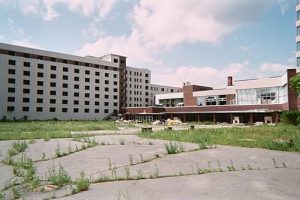
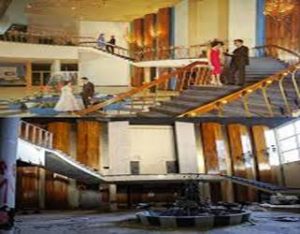
Photo of one of many fallen buildings of the Concord in the end .
Sunrise Manor Hotel (A 2 star relatively unknown hotel outside of Ellenville, NY up Ulster Heights Road)
How did I learn about the “Borscht Belt”? Once a year my parents Henry and Adele Norwalk took my sister Doris and I to “The Borscht Belt” to an obscure unknown hotel called the Sunrise Manor in Ellenville N.Y. the first two weeks of August when my father Henry got his annual vacation. He was a travelling salesman of woman’s coats and suits for manufacturers Hiller Brothers and Hiller in Manhattan’s garment district.
We were kids under 10 years old and to us it was the best vacation ever. My father traveled on the road and sold woman’s coats and suits for his cousins the Hiller Brothers who manufactured everything in the woman’s line. My mother was a house wife. Since my mom and dad had limited resources for any leisure activities like eating out, movies or even Good Humor truck ice cream we all looked forward to 2 weeks in the cool mountain air at the Sunrise Manor.
We did not have a car and very little money so no day trips to the beach, the Bronx Zoo, Coney Island, Palisade Amusement Park, and Bear Mountain and never went shopping except for bare necessities. When we had to travel we took buses, subways and sometimes we would walk to the subway. But as kids what did we know until we got older. So going to “The Mountains” was a big deal for all of us including mom and dad.
While most kids were in summer camp, day camp or on day trips to the beach, stayed in local bungalow colonies in the Rockaway’s or upstate NY, my sister and I hung out in front of our house during the day and at night we would play with the kids who came home from day camp or a day trip. We played the usual games, scully, hop scotch, Johnny ride a pony, stoop ball, hide and seek, stick ball, catch fire flies, pickup sticks, and put them in a jar, or just sit outside. So when August came around we were ready for those 2 weeks away at Sunrise Manor. But regardless of your social or economic status it was a big deal.
Sunrise Manor Hotel was owned and operated by the Dickman and Kramer families. It was a lovely clean low end hotel up a lonely mountain on steep winding road called Ulster Heights Road aka Cape Avenue right next to Cape Pond just outside of Ellenville NY .
Great food as much as you want, nice families, every day and night something to do, swimming in the lake and boating, and later they got a pool, day camp, hikes down Ulster Heights road into the woods to the water fall, Simon says, bingo, mahjong for the woman, poker and pinochle for the men, fishing, looking for salamanders after the rain, evenings snack time in the children’s dining room, pin ball machines a nickel a game and the regular sports activities. Nothing fancy or exotic like other hotels as the Nevele, the Concord, Grossingers, Kutchers, Brickman’s Brown’s Jerry Lewis’s favorite hotel , The Pines , Raleigh, The Tamarack Lodge, Villa Roma and hundreds of others .
The biggest entertainer at the theater that I can remember was Sam Levenson a well known NY comedian. That was the Saturday night show. The rest of the week there was movie night, square dancing night, amateur night. Dance and dance lessons night etc. Those 2 weeks in August went by fast and then back to the hot city. We did not have air conditioning and slept in our parents’ bedroom on the floor with a new fan cooling all of us off. Not really.
The Borscht Belt” started to disappear slowly. There were many factors. It all began with the Introduction of air conditioning in homes and cars. Mostly Jews went to the Catskills to escape the summer heat and humidity. Then ship cruising became popular and affordable, jet travel started in the late 1950’s with the introduction of the Boeing 707 around 1958 as Jews would take off to see the world. The Disney theme parks became another destination.
The arrival of gambling close to New York City took business away when gambling came to Atlantic City, New Jersey and travel to Las Vegas became affordable and popular. The proposals for gambling in New York never made it through the legislature which hurt the hotels and bungalow colonies in Ulster and Sullivan County and contributed to its demise.
A place where you were warmly welcomed, a place to get away with your family for a reasonable price, where old lives continued and new lives began under romantic skies of “The Borscht Belt”.
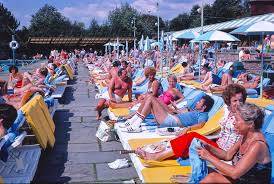
It was a wonderful place to vacation especially during the hot humid summers and many places at the beginning of the 20th century did not accept Jews so it was off to the mountains to enjoy the cool night air, the delicious, fresh and unlimited food, the incredible entertainment, plenty of romance, the fresh mountain air, the comfortable evenings, and the mountain scenery was not to be missed. Unfortunately “The Borscht Belt” era became a beautiful memory and a piece of Jewish American history.
The Concord Kiamesha Lake NY
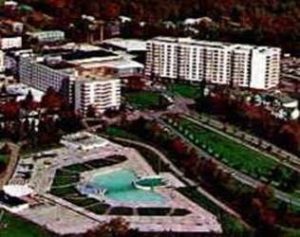
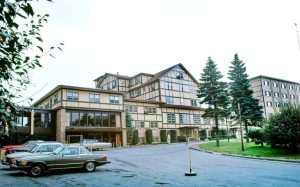
What happened to the Concord Hotel?
The Concord Resort Hotel, a legendary resort in the Catskill Mountains, closed its doors in 1998 after a long run of hosting Jewish vacationers from New York City. The resort, which once boasted over 1,500 guest rooms and a dining room seating 3,000, struggled financially and eventually filed for bankruptcy in 1997, owing over $8 million in back taxes to Sullivan County.
After its closure, the property changed hands several times. In 1999, it was sold to a partnership led by Joe Murphy, with Louis R. Cappelli as a silent partner, for $10.5 million. Although there were plans to build a $500 million resort, the hotel portion was eventually demolished in 2008.
What happened to the property?
Golf Course and New Development: The “Monster Golf Course” continued to operate, and a new casino resort, Resorts World Catskills, was built on part of the site. It opened in February 2018, featuring a 258-room hotel, a 75,000-square-foot casino, and various dining options.
Current Status: Today, the site of the former hotel is part of the Resorts World Catskills, while the golf course remains a separate entity, known for its challenging layout and PGA-accredited academy.
Despite its closure, the Concord Resort Hotel’s legacy lives on, with many nostalgic memories and stories of its grandeur still shared among those who visited or worked there.
Source Wikipedia
Thank you for sharing a story!
It’s fascinating how the Borscht Belt became such a pivotal space for Jewish families when so many other vacation spots were off-limits to them. The sense of community must’ve been so unique. It’s sad, though, that it declined due to broader economic and cultural shifts.
Yes it was a beautiful time and now just a passing memory .
The Borscht Belt era is a rich but underappreciated chapter of American cultural history. The way these resorts created a distinctly Jewish-American cultural space combining comedy, music, and communal gathering had an outsized influence on broader American entertainment that rarely receives full credit. Thank you for documenting this history before the living memory of it fades further.
Yes, how true and let’s not forget the Jews of the Borscht Belt created the first sit down all you can eat buffet.
The history of the Borscht Belt resorts is such a fascinating chapter in American cultural history — it was genuinely one of the most influential creative environments for mid-20th century comedy and entertainment. The economic rise and decline of that region tracks closely with the broader story of how American middle-class vacation habits changed. Oral history projects documenting memories of those summers are particularly valuable now, and transcribing recorded interviews makes that material much more accessible for researchers.
If you want to offer an audio experience of life in the Jewish Alps or participate in recorded interviews on the Borscht Belt experience, contact the Borscht Belt Museum in Ellenville NY. They have and are expanding a library of audio recorded history from people’s personal experiences and are looking for people to tape and interview.